
Is Expensive Beauty Tech Worth It? A 2026 Review

Table of Contents
- The Real Cost of Expensive Beauty Tech
- How to Calculate Beauty Device Cost Per Use
- LED Face Mask Benefits and Cost: What You Get for the Price
- Finding the Best At-Home Skin Tightening Device
- Beauty Devices That Work: Evidence, Testing, and Realistic Results
- Verdict: Who Should Buy Premium Beauty Tech
- Frequently Asked Questions
Last Updated: October 16, 2026
The Real Cost of Expensive Beauty Tech
According to Grand View Research's Beauty Tech Market report, the global beauty tech market was valued at $66.2 billion in 2024, and it is projected to reach $172.9 billion by 2030. That growth curve explains why premium devices keep appearing on our feeds. It does not explain whether any single device deserves your money.
At Boss Up Entertainment, we sell beauty tech, so we have a stake in this conversation, which is exactly why we want to answer honestly: is expensive beauty tech worth it? A device is worth its price only when its cost per use drops below what you would pay for the same result elsewhere. Most buyers never run that math. Below, we show you how to run it in five minutes, and which devices pass the test.
What the Global Market Numbers Show
Market size tells you what other people buy, not what works. The U.S. beauty devices market alone was estimated at $24.53 billion in 2026, growing at a 19.94% CAGR through 2034, per Market Data Forecast's U.S. Beauty Devices report. Meanwhile, The Business Research Company flags the high cost of advanced devices as a major restraint on the same market. Both things are true at once: the category is booming, and price is the top reason people hesitate.
A high price tag is not proof of quality, and a low one is not proof of junk. The device that earns its place is the one you will actually use for years.
How to Calculate Beauty Device Cost Per Use
Beauty device cost per use is the purchase price divided by the number of times you realistically use the device over its lifespan. A $104.69 LED mask used three times a week for two years costs about $0.84 per session. A $30.60 laser hair removal device used weekly for one year costs roughly $0.59 per session.

Run the formula before you buy:
- Divide the price by your realistic weekly uses
- Multiply by 52 for a year, or 104 for two years
- Compare that number to a single professional session
Break-Even Math vs. Professional Treatments
Professional treatments cost far more per session than at-home devices cost per use. An at-home device typically breaks even within a few months if you keep a consistent routine. The catch is adherence: a device you skip has an infinite cost per use.
Most buyers fool themselves by comparing sticker prices, not usage. A $35 device used twice and abandoned cost $17.50 per use; a $105 device used 250 times cost less than half a dollar per use. Consistency, not price, decides the winner.
LED Face Mask Benefits and Cost: What You Get for the Price
LED face mask benefits come from specific wavelengths: red light for firming and smoother skin, blue light for acne, and near-infrared for skin texture and anti-aging support. A mask with 336 LED chips and three modes covers more concerns than a single-mode device.
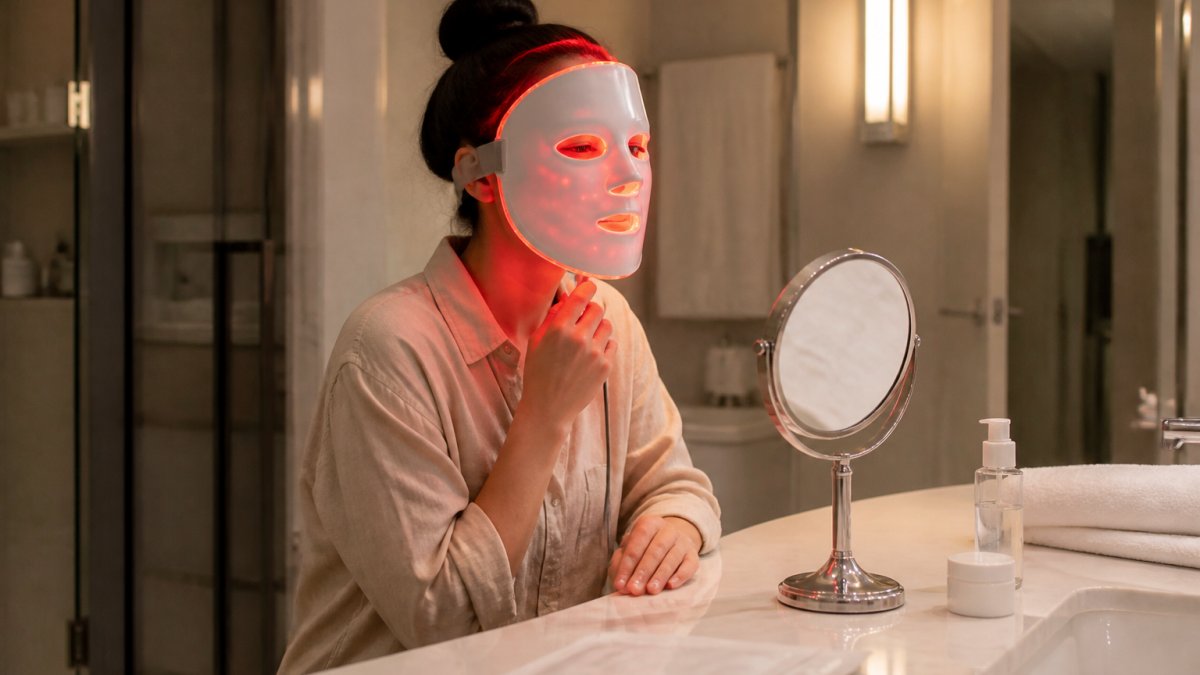
Our LED Face Mask Facial Care Tool uses 620nm red light, 850nm near-infrared, and 460nm blue light across 336 chips, with a cordless 3000mAh battery and a honeycomb matrix that keeps light beads off your skin. It runs $104.69. Our LED Therapy Face Mask For Skin Rejuvenation is the budget entry at $35.97, and the LED Rechargeable Face Mask covers whitening, freckle removal, wrinkle removal, and skin rejuvenation at $56.15.

Here is the honest caveat: the MDPI study on beauty tech customer experience ties device loyalty to personalization and service quality, not raw power. A mask you enjoy wearing beats a stronger one that sits in a drawer.
Finding the Best At-Home Skin Tightening Device
The best at-home skin tightening device combines microcurrent stimulation with a routine you can repeat three to four times a week. Microcurrent devices send low-level electrical currents to facial muscles, and results depend on frequency far more than price.
Our Beauty Facial Massager pairs microcurrent skin firming with seven-color light modes for the face, neck, and jawline. It costs $35.43, which makes it the cheapest way to test whether microcurrent suits your skin before committing to a premium unit. Use it on clean skin with a conductive gel, five minutes per side, and expect gradual firming rather than overnight change.
| Device | Price | Best For | Cost Per Use (2 yrs) |
|---|---|---|---|
| LED Face Mask Facial Care Tool | $104.69 | Full multi-mode LED therapy | ~$0.84 |
| LED Rechargeable Face Mask | $56.15 | Acne, freckles, rejuvenation | ~$0.45 |
| LED Therapy Face Mask | $35.97 | First LED mask, budget entry | ~$0.29 |
| Beauty Facial Massager | $35.43 | Microcurrent firming, jawline | ~$0.28 |
| Laser Hair Removal Device | $30.60 | Whole-body hair removal | ~$0.59 |
Beauty Devices That Work: Evidence, Testing, and Realistic Results
Beauty devices that work share three traits: a clear mechanism, a realistic timeline, and a routine you can sustain. But "clinically proven" on a product page tells you almost nothing.

Here is how the major at-home categories stack up when you apply that filter.
Red and near-infrared LED therapy has the strongest independent research base of the at-home categories. Peer-reviewed studies, including several indexed on PubMed Central, have examined LED for wound healing, acne, and skin rejuvenation.
Microcurrent evidence is promising but smaller. Some studies suggest measurable improvements in facial firmness and wrinkle depth, but the research often uses professional-grade devices at higher amperage than at-home units deliver.
At-home laser and IPL hair removal has the clearest mechanism: light energy targets melanin in the hair follicle, damaging it during the growth phase. Independent studies show reduced regrowth over 8-12 weeks of weekly sessions, but results depend heavily on hair color, skin tone, and device energy output.
Household Whole Body Painless Laser Hair Removal Device →
What most guides miss is that device effectiveness is a range, not a yes-or-no. The PubMed Central review on beauty-related health concerns shows that outcomes depend heavily on the device and the concern being treated, which is why blanket claims like "this works for everything" should make you skeptical.
When you evaluate a device, ask:
- Was the study independent, or funded by the manufacturer?
- How many participants were enrolled, and for how long?
- Did the study use the same device settings and treatment frequency the brand recommends?
- Were results measured by a dermatologist or by self-report?
Set realistic expectations based on the best available evidence:
- LED therapy: visible results in 8-12 weeks of consistent use, with effects fading if you stop
- Microcurrent: subtle firming in 4-6 weeks, best with ongoing use; benefits are not permanent
- At-home laser: reduced regrowth over 8-12 weeks of weekly sessions, with maintenance sessions needed to sustain results
Safety, Contraindications, and When to See a Professional
See a professional for deep wrinkles, severe acne, pigmentation disorders, or any skin condition that has not improved with at-home care. At-home devices handle maintenance and mild concerns well. They are not a substitute for medical treatment, and no device should be used on broken or infected skin.
Safety also depends on your medications and health history. If you take photosensitizing drugs, including certain antibiotics, acne medications, and diuretics, LED and laser devices can increase your risk of burns or hyperpigmentation. If you are pregnant, use a pacemaker, or have a history of skin cancer, consult a dermatologist first. Eye safety matters too: never use an LED mask or laser device without the manufacturer's protective eyewear, and avoid looking directly into the light source.
Verdict: Who Should Buy Premium Beauty Tech
Premium beauty tech is worth it for buyers who will use the device at least twice a week for two years, and a waste of money for everyone else.
But the sticker price is only the first cost. To judge whether an expensive device is truly worth it, look at total cost of ownership, repairability, and what happens when it stops working.
Total cost of ownership includes the purchase price plus replacement parts, consumables, and maintenance.
Repairability and warranty matter more than most buyers realize. Many beauty devices are sealed units with no user-serviceable parts. If the battery fails or the motor dies, you replace the whole device, not a $20 component.
Adherence is the hidden variable. A device you use consistently for two years can cost pennies per session; one you abandon after three weeks costs dollars per session, and no warranty covers that.
Break-even math, done honestly:
- A $105 LED mask used three times a week for two years costs about $0.84 per session. A single professional LED session can cost $50-$150. Break-even: under two months.
- A $35 microcurrent device used three times a week for two years costs about $0.28 per session, plus gel. A professional microcurrent facial can cost $100-$200. Break-even: under two months.
- A $30 at-home laser used weekly for one year costs about $0.59 per session. Professional laser hair removal can cost $200-$500 per session. Break-even: under one month.
Those numbers favor at-home devices by a wide margin, but only if you actually use them. The math does not care about your intentions, only your habits.
The Barclays 2026 beauty trends report found that 20% of consumers planned to spend more on beauty in 2026, and the average consumer spent £97.80 on beauty-specific tech in 2025.
Frequently Asked Questions
Are at-home beauty devices really worth the investment?
It depends on the device and your skin goals. A beauty tech device with a clear use case, like an LED face mask for acne or a microcurrent tool for firming, can deliver visible results over time. The math matters: a $104.69 LED mask used three times a week for a year costs about $0.67 per session. Professional LED sessions often run $50 or more each, so the break-even point arrives fast if you stay consistent.
Is there a skin tightening device that actually works?
Microcurrent facial devices are the most common at-home option for skin firming and jawline contouring. Results build gradually and depend on routine consistency, usually several sessions per week. The Beauty Facial Massager at Boss Up Entertainment is a beginner-friendly microcurrent option at $35.43. Set realistic expectations: at-home tools support firming over time, but they will not replicate the immediate lift of an in-office treatment.
How can you tell whether a beauty device is worth the price?
Calculate beauty device cost per use first. Divide the price by how many sessions you will realistically complete in a year. Then compare that number against professional treatment costs for the same concern. Also check the evidence quality: does the device specify wavelengths, power output, or clinical research? A $35 device used consistently often beats a $300 device that sits in a drawer.
Are expensive beauty tools better than affordable alternatives?
Not automatically. Price often reflects build quality, warranty, and features like adjustable intensity or multiple light modes. The LED Face Mask Facial Care Tool at $104.69 includes 336 LED chips and three modes, which justifies the cost for someone treating both wrinkles and acne. A simpler $35.97 LED Therapy Face Mask covers basic skin rejuvenation. Match the specs to your specific skin concern rather than buying the highest price tag.
What is the actual benefit of an LED face mask compared to other skincare tools?
LED face masks use specific light wavelengths: red light (620nm) and near-infrared (850nm) for wrinkles, blue light (460nm) for acne. Unlike creams that sit on the surface, LED therapy targets the skin at a cellular level. The LED Rechargeable Face Mask at $56.15 offers whitening, freckle removal, wrinkle removal, and skin rejuvenation functions in one portable device, making it a versatile entry point for anyone new to beauty tech.