
How to Identify High Quality Jewelry: 2026 Guide

Table of Contents
- Start With Jewelry Hallmarks and Stamps Meaning
- How to Distinguish Solid Gold, Gold-Plated, and Gold-Filled
- Check Metal Purity: Silver, Stainless Steel, and More
- Gemstone and Diamond Quality: The 5 Cs in Plain English
- Inspect Settings, Prongs, and Stone Security
- Craftsmanship, Finish, and Construction: Signs of Well-Made Jewelry
- How to Check Jewelry Quality Online
- Your Jewelry Buying Checklist Before You Pay
- Frequently Asked Questions
Last Updated: October 18, 2026
Start With Jewelry Hallmarks and Stamps Meaning
Hallmarks and stamps are the fastest way to start judging how to identify high quality jewelry.
Here is what to look for:
- Purity marks: "925" means sterling silver, "750" means 18-karat gold, "585" means 14-karat gold
- Country marks: a British hallmark includes an assay office symbol, a date letter, and a purity mark
- Maker's mark: the initials or logo of the manufacturer or studio
A common mistake is assuming a stamp proves authenticity. The Gemological Institute of America's guide to jewelry forensics notes that trained assessors examine design, engineering, and construction to judge quality and longevity, not just a single mark.

How to Distinguish Solid Gold, Gold-Plated, and Gold-Filled
Solid gold is gold all the way through, while gold-plated and gold-filled pieces are base metals with a gold layer on top. The difference decides how long the piece lasts and whether it can be resized or repaired.
The four categories break down like this:
| Type | What It Is | Gold Content | Durability |
|---|---|---|---|
| Solid gold | Gold alloy throughout | 10K to 24K | Highest, repairable |
| Gold-filled | Thick gold layer bonded to base metal | At least 5% gold by weight | Good, years of wear |
| Vermeil | Sterling silver with gold plating | 2.5 microns minimum | Moderate |
| Gold-plated | Thin gold layer over base metal | A fraction of a micron | Lowest, wears fast |
Gold-filled jewelry holds up far better than plated pieces because the gold layer is mechanically bonded and much thicker. Vermeil sits in the middle: it uses sterling silver as the base, so it resists tarnish better than brass or copper.

Check Metal Purity: Silver, Stainless Steel, and More
Metal purity is the percentage of precious metal in a piece. Sterling silver is 92.5% silver; stainless steel is an alloy that resists tarnish and rust. Each metal has its own quality signals, and each at-home test has limits.
What to check on common metals:
- Sterling silver: look for "925" or "sterling." Real sterling tarnishes over time, which is normal and polishable
- Stainless steel: usually marked "316L" or "surgical steel." It resists tarnish and works well for everyday pieces
- Platinum: marked "950" or "plat." It is dense and heavy for its size
At-Home Tests: What They Can and Cannot Tell You
Most at-home tests are preliminary screens, not proof. Use them to decide whether a piece deserves professional evaluation, not to certify authenticity.
- Magnet test: Precious metals like gold and silver are not magnetic, so a strong pull suggests a base-metal core under plating. But some base metals are also non-magnetic, so a non-magnetic result proves nothing on its own.
- Float test: A piece that floats is unlikely to be solid gold or platinum, since those metals are dense. But hollow constructions can float even when the metal is genuine, and the test says nothing about plating thickness or alloy composition.
- Acid test: Jewelry-supply acid kits can indicate gold karat range, but they leave a visible mark, can damage plating, and are easy to misread. Treat acid testing as a last resort for scrap or unmarked pieces, not finished jewelry you plan to wear or resell.
Buyers often over-rely on the magnet or float test and then feel confident about a piece that is actually gold-plated over a non-magnetic base metal. Treat any single at-home result as one data point among several.
When to Get Professional Testing
Professional testing is the only reliable way to confirm metal content. A jeweler or assay office can use X-ray fluorescence (XRF), which reads surface composition without damaging the piece, or fire assay, which is destructive but definitive for scrap. For any consequential purchase, an engagement ring, an inherited piece, or a resale transaction, budget for a professional evaluation rather than relying on home tests.
Gemstone and Diamond Quality: The 5 Cs in Plain English
Gemstone quality comes down to the 5 Cs: cut, color, clarity, carat weight, and certification. These apply to diamonds and colored stones, though the weighting changes for each. The goal is to understand what each one tells you, and what it does not.
Here is how each one works:
- Cut: how well the stone is shaped and faceted. Better cut means more sparkle; it is the one C largely controlled by human skill and affects brightness, fire, and scintillation more than carat weight does
- Color: for diamonds, less color is usually better. For colored gems, richer color is prized, but a stone can be too dark to perform well
- Clarity: how few internal flaws the stone has. Fewer flaws means higher clarity, but eye-clean stones can have inclusions that are invisible without magnification
What Grading Reports Do and Do Not Tell You
A grading report from a recognized lab, such as GIA, AGS, IGI, or GCAL for diamonds, and AGL or GIA for colored stones, documents the stone's measured characteristics at the time of grading.
For colored stones, grading is less standardized than for diamonds. A certificate from a respected lab adds confidence about identity and treatment, but colored-stone grading still involves more judgment.
The Limits of Visual Inspection
Cloudy or dull gemstones are a red flag. A well-cut stone catches light and looks bright even in low light; a poorly cut one looks flat and lifeless. But visual inspection has real limits:
- Lighting in stores is designed to flatter stones; ask to see the stone under neutral light and away from the display case
- Inclusions and treatments are often invisible to the naked eye; only a lab can identify treatments like fracture filling or heat treatment
- Photos and videos distort color and hide flaws; never judge a stone from an image alone
Quality Without Equating Price With Value
Price is a signal, not a verdict. A high price can reflect rarity, brand, or marketing as much as quality, and a lower price can reflect a favorable market rather than a flaw. Judge a stone by how its cut, color, clarity, and carat weight work together for your purpose, an everyday pendant may favor durability and eye-clean appearance, while an investment stone may justify a premium for cut and certification.
Inspect Settings, Prongs, and Stone Security
Prongs and settings hold the stone in place. Loose prongs are the most common reason stones fall out, and a wobbly stone is a warning sign.
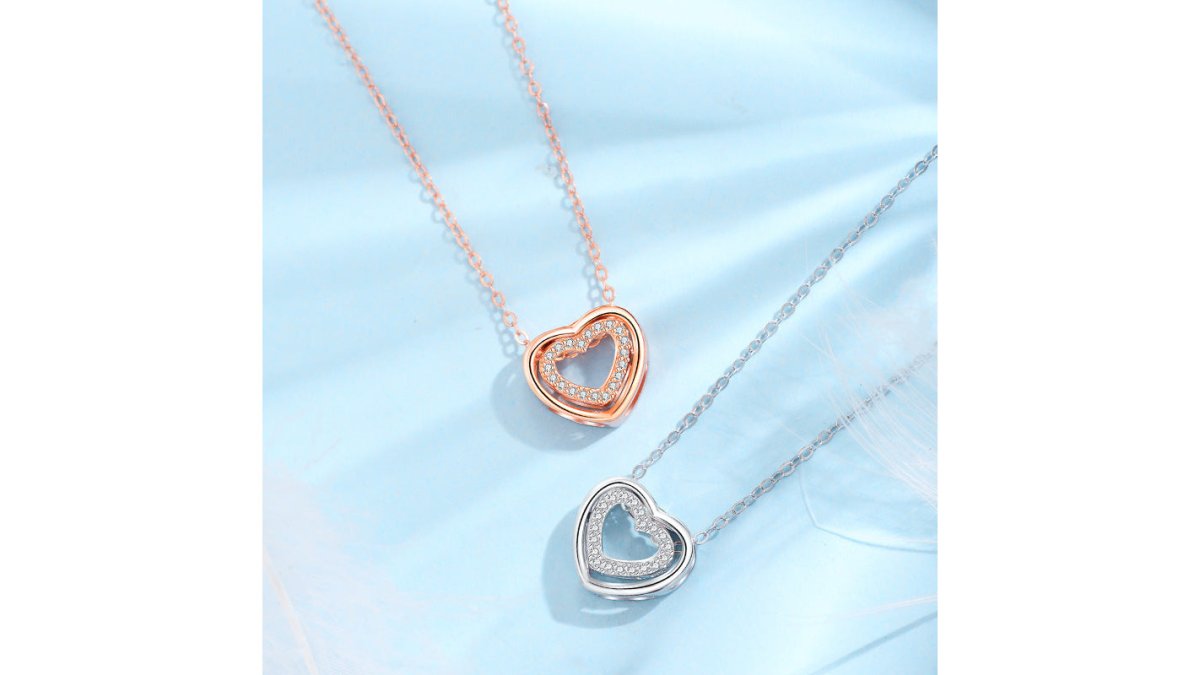
S925 Sterling Silver Heart To Heart Pendant Necklace →
Run through this check on any piece with a stone:
- Look at each prong. They should be even, smooth, and grip the stone firmly
- Wiggle the stone gently. Any movement means the setting is loose
- Check for gaps between the stone and the metal seat
- Look for bent or worn prongs, especially on older rings
- Confirm the setting matches the stone's shape and size
A well-set stone sits snug and level. The metal should not scratch the stone or leave sharp edges that catch on clothing.
The clasp matters just as much on necklaces and bracelets. A flimsy clasp is a common failure point.
Craftsmanship, Finish, and Construction: Signs of Well-Made Jewelry
Craftsmanship is where quality becomes visible. A well-made piece has a smooth finish, even construction, and clean joins. A poorly made one shows rough edges, uneven plating, and weak solder points.
Signs of good construction:
- Smooth, polished surfaces with no sharp edges or burrs
- Even plating with no patchy or bubbled areas
- Clean solder joints that sit flush
- Consistent thickness across the piece
Signs of poor workmanship:
- Rough or scratchy edges, especially on the inside of rings
- Plating that looks thin or uneven at the edges
- Lumps or gaps at joints
- A clasp or hinge that feels loose or gritty
Turn the piece over. The back and underside reveal more about construction than the front display side. Makers who cut corners usually cut them where buyers do not look.
How to Check Jewelry Quality Online
Online jewelry shopping removes the hands-on check, so you have to rely on documentation and seller reputation, photos, certificates, and return policies.
What to verify before you buy:
- High-resolution photos: zoom in on hallmarks, settings, and clasps
- Certificates: ask for gemstone grading reports or metal certification
- Seller reputation: check reviews and how long the seller has operated
- Return policy: confirm you can return the piece if it fails inspection
At Boss Up Entertainment, we curate statement jewelry and lifestyle pieces with clear product details, so you know the metal, materials, and specs before you order. Our S925 Sterling Silver Heart To Heart Pendant Necklace lists its 925 silver purity and zircon stone, and our Engraved Moissanite Jewelry Set comes with a GRA certificate.

Your Jewelry Buying Checklist Before You Pay
Run this checklist on any piece before money changes hands.
- Read the hallmark or stamp with a loupe
- Confirm the metal purity matches the price and claim
- Identify whether it is solid, filled, vermeil, or plated
- Check every prong and wiggle each stone
Quality also means longevity. A piece you can resize, repair, and wear for years beats a trend piece that falls apart in months.
For statement pieces you plan to wear daily, our S925 Sterling Silver Butterfly Ring and our stainless steel cremation pendant both use metals built to hold up to regular wear.
Frequently Asked Questions
What should I look for when buying high quality jewelry?
Start with the hallmark or quality stamp, then confirm the metal purity (for example, 925 for sterling silver or 14K for gold). Check that the clasp works smoothly and the prongs are tight. Look for even finish, no rough edges, and secure stone settings. Ask for documentation such as a GRA certificate for moissanite or an appraisal for fine pieces. A jewelry buying checklist helps you compare items consistently, and a jeweler's loupe at 10x magnification reveals details the naked eye misses.
How can you tell if jewelry is real gold or silver?
The most reliable first step is reading the stamp. Solid gold carries a karat mark like 14K or 18K, while sterling silver is stamped 925 or S925. Gold-plated and gold-filled pieces may also carry marks, so ask the seller to state the construction clearly. A magnet test can rule out some base metals, but it is not definitive. For consequential purchases, have a jeweler test the piece with acid or a spectrometer. Visual inspection alone may not establish authenticity, according to expert cautions.
Does heavier jewelry mean better quality?
Not always. Weight can signal solid construction in chains and rings, but a heavy piece may simply use a dense base metal under plating. Quality depends on metal purity, setting security, and finish, not weight alone. A lightweight 18K gold stud can outperform a heavy plated costume piece. Use weight as one data point alongside hallmarks, craftsmanship, and stone security. If a seller promotes weight as the main proof of quality, ask for the metal purity and construction details in writing.
How do I check jewelry quality online before buying?
Zoom in on product photos to look for hallmarks, even prongs, and clean solder joints. Read the description for metal purity, plating thickness, and gemstone specifications. Check whether the seller provides certificates, such as a GRA certificate for moissanite, and a clear return policy. Look for close-up images of the clasp and setting. Customer reviews that mention tarnish, cloudy gemstones, or bending prongs are warning signs. When details are missing, ask the seller directly before you pay.
Buying jewelry with confidence starts with knowing what to look for, and it helps to shop where the details are already spelled out. Boss Up Entertainment curates premium statement jewelry and lifestyle pieces with clear metal specs, purity marks, and certification where it matters. Browse our collection to find pieces built to last, then shop now and boss up your everyday style.